
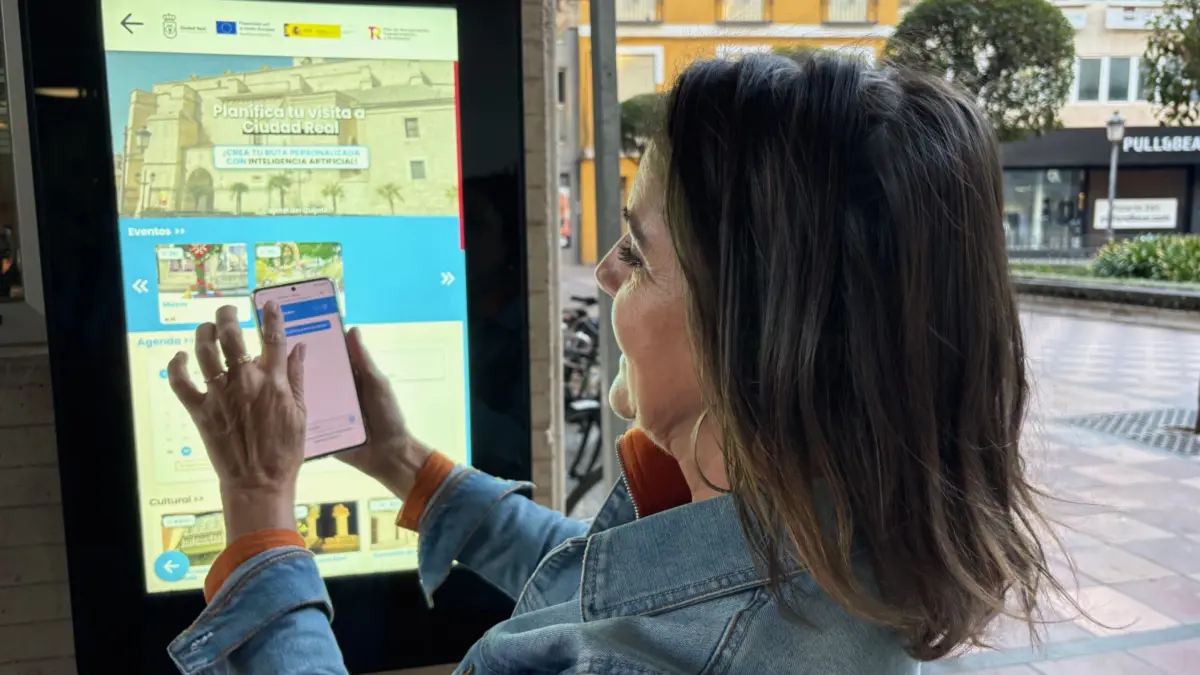
Amidst the charming streets of Ciudad Real, a pioneering digital transformation is changing the landscape of tourism in the historic Spanish city. The local government has recently unveiled the first set of results from its innovative tourist platform, Cicerone, an interactive initiative that combines Artificial Intelligence with the latest in digital display technology to revolutionize visitors’ experiences.
Since its launch, the Cicerone platform has attracted over 45,000 users to its newly designed website, proving itself as a vital tool in promoting local tourism. The system is not just another digital interface but a comprehensive solution to enhancing how tourists interact with the city, understanding and adapting to their interests in real-time based on their online interactions.
Cicerone’s reach has extended not only locally but also across national and international boundaries. The largest number of domestic users hail from Madrid, accounting for nearly half of the platform’s consultations. Other significant Spanish cities like Barcelona, Sevilla, and Valencia also contribute to the visitor statistics, highlighting Ciudad Real’s appeal across the entire country. On the international front, European nations like Austria and Italy, as well as countries from Latin America including Venezuela and Argentina, top the list of foreign visitors, indicating the city’s growing appeal as a global tourist destination.
The historical and cultural allure of Ciudad Real undoubtedly forms the crux of its appeal. More than half of all visitors to the platform seek out information on the city’s rich cultural heritage, museums, and historical sites. The most popular attractions include the City Real Museum, which tops the list followed by the Renaissance architectural marvel, Casa del Conde de la Cañada and the seventeenth century Convento de la Merced, now a fine arts museum.
Local events also draw significant attention; from the traditional summer fair Feria de Agosto attracting the most queries to other cultural festivities that enrich the city’s vibrant community life.
Further enhancing the experience, the Cicerone platform offers downloadable content which is increasingly popular among users, with the Tourism Guide of Ciudad Real leading the downloads. This feature complements well the on-site experience, allowing visitors to engage with the city’s offerings at their own pace and based on personalized interests.
Mayor Francisco Cañizares views the Cicerone project as a cornerstone in establishing Ciudad Real as a leading destination for cultural, gastronomic, and sports tourism within the inland regions of Spain. Coupled with his enthusiasm, Tourism Councilor Cristina Galán sees this technological advancement as a crucial step towards the digitalization of the tourism sector, tailored to meet the evolving needs of modern travelers and benefiting both visitors and locals alike.
The Cicerone project, part of the broader Sustainable Tourism Destination Plan and backed by a substantial 142,999 euros from Next Generation EU funds, positions Ciudad Real at the forefront of smart tourism in Castilla-La Mancha. It stands as a testament to how cities can beautifully blend heritage with high technology to create fulfilling and enriching visitor experiences. As Ciudad Real continues to embrace these innovations, its story is not just of preserving the past but dynamically moving into the future, making it a must-visit destination on every savvy traveler’s map.